
11 min read ·
Turn Opening-Week Interest Into Measurable Repeat Play
Defines qualifying activity, follows mature 30-, 60-, and 90-day cohorts, checks capacity, and ties each retention test to a preset KPI.
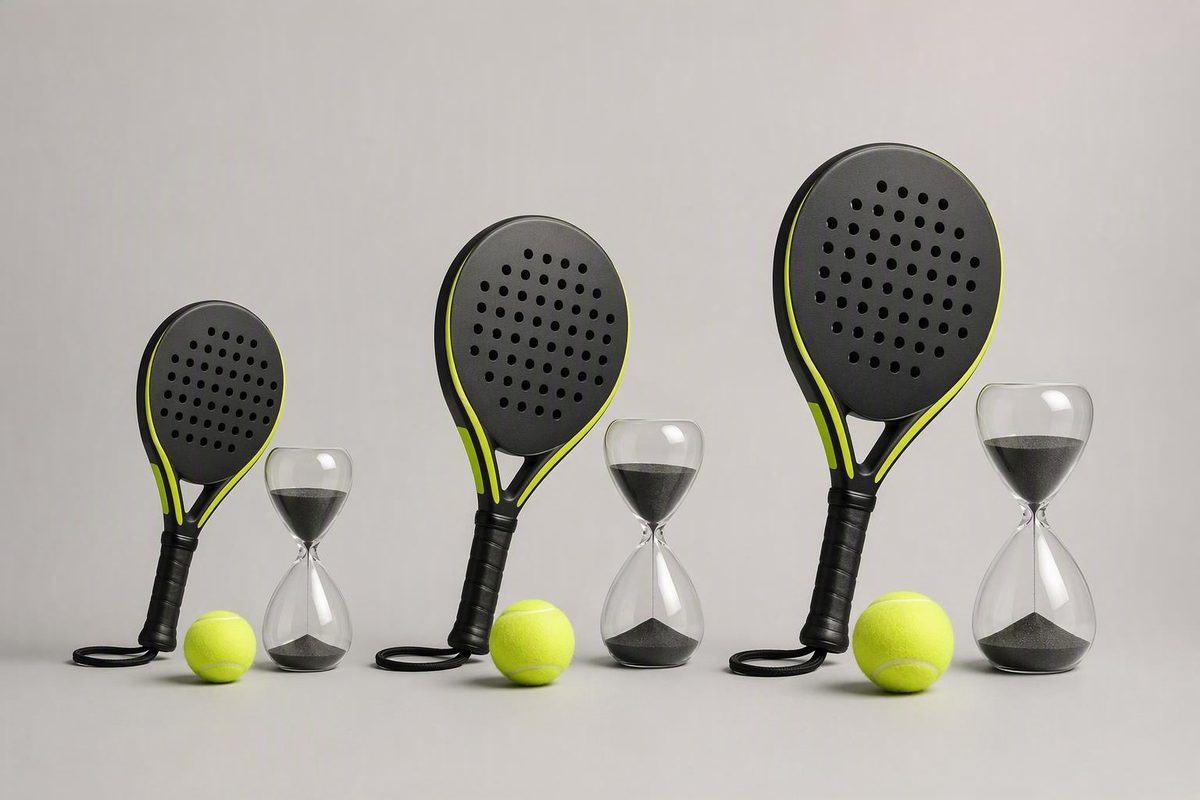
For practical reporting, padel club player retention should be measured through verified qualifying activity within a disclosed period. For a pay-to-play cohort, the early measure can be the share of identifiable first-time players who complete another paid booking within 30 days. That second booking is an activation or early-retention signal—not proof of sustained loyalty. Longer 60- and 90-day measures can show whether repeat play develops into an ongoing habit.
Use acquisition cohorts that have received the full observation window. Do not substitute opening-week occupancy, community-group size, or national participation growth for player-level repeat activity. This framework separates acquisition from continued play, identifies possible capacity constraints that warrant investigation, and gives each retention initiative a defined outcome.
Start with repeat activity, not launch buzz
A practical umbrella definition is:
A returning player is someone who completes another verified qualifying activity within a stated period after an initial visit.
“Verified” means the club can connect both activities to the same identified player and confirm that the sessions took place. “Qualifying activity” depends on the commercial model:
- For pay-to-play players, it may mean another completed paid booking.
- For members, it may mean completed court or program activity covered by membership.
- For coaching, leagues, tournaments, and junior programs, it may require verified attendance rather than enrollment alone.
The club should disclose both the activity rule and the observation window whenever it reports retention. Thirty days can measure early rebooking, while 60 or 90 days can assess whether participation is becoming sustained.
Opening demand is therefore an acquisition signal, not a retention result. In one anonymous Reddit user’s self-reported launch scenario, a new five-court club had a full opening week and a 600-person chat group. That anecdote indicates initial interest, but it does not establish how many people paid, completed a first visit, booked again, or remained active.
Keep the categories separate:
- Inquiries and community members: people within reach of the club.
- Identifiable prospects: people whose contact details and acquisition source are recorded.
- First-time players: identified people completing their first qualifying activity.
- Returning players: first-time players completing subsequent qualifying activity.
- Frequent or sustained players: returning players meeting a further activity threshold.
- Renewed members: eligible members who continue beyond a defined renewal point.
Document these definitions for each product. Otherwise, a community member may be mistaken for a customer, an enrollment for attendance, or an initial return for sustained retention.
Separate each stage of the player lifecycle
Retention is not one number. It is a sequence of behaviors, with each stage answering a different operational question.
Unique players are the distinct identified players with qualifying activity during a reporting period. Counting people rather than reservations prevents one highly active customer from inflating the apparent player-base size.
First-time players are people completing their first recorded club activity. Returning players have subsequent verified activity. Playing frequency adds depth by showing how often active players participate. These are distinct concepts in the Playtomic Players Report documentation, although every club still needs to specify how its reporting handles identity, guests, payment status, and completed sessions.
The lifecycle can then be measured more precisely:
- First booking: acquisition becomes completed activity.
- Second booking: the player demonstrates an initial return.
- Sustained activity: the player meets a further frequency or time threshold.
- Membership conversion: the player purchases a membership, where applicable.
- Membership renewal: an eligible member extends for another term.
- Inactivity or churn: the player passes the club’s disclosed threshold without qualifying activity or renewal.
- Reactivation: an inactive player resumes qualifying activity.
A second booking is an early activation or retention event, not proof of long-term loyalty. Conversely, inactivity does not necessarily mean that a player has abandoned the club.
Membership growth must also be separated from renewal. Total membership can increase through new-member acquisition, organizational enrollment, or expansion even when existing members are not renewing. Calculate renewal using an eligible-member cohort: members who reached a renewal point and renewed, divided by all members eligible to renew under the stated rule.
Build 30-, 60-, and 90-day acquisition cohorts
Cohort analysis groups players by the week or month in which they completed their first qualifying activity. Weekly cohorts may be useful during launch; monthly cohorts may be easier to interpret once activity stabilizes. Either method prevents a steady flow of new players from hiding weak repeat behavior among earlier arrivals.
A proposed early-retention measure for pay-to-play cohorts is:
30-day second-booking conversion = first-time players who complete at least one subsequent paid booking within 30 days ÷ all eligible first-time players in the cohort
The denominator should include only players who have had the full 30-day opportunity to return. If a report is produced on June 30, a player acquired on June 25 does not yet have a complete result. Mark the cohort as incomplete instead of comparing it with mature cohorts.
At 60 days, the club could report the share of first-time players who complete at least two subsequent sessions. This is a club-selected threshold, not an industry standard. Its purpose is to distinguish one early return from the beginnings of repeated participation.
At 90 days, divide each mature cohort into three states:
- Continued activity: the player meets the club’s disclosed 90-day rule.
- Inactive: the player does not meet that rule despite sufficient observation time and usable records.
- Unknown: status cannot be determined because identity, guest, attendance, or booking data are incomplete.
Do not force unknown players into the inactive category. That would turn a data-quality problem into apparent churn.
Hypothetical example: A mature cohort contains 100 first-time players. If 35 complete a second paid booking within 30 days:
35 ÷ 100 = 35%
The 35% result is arithmetic for demonstration. It is not a padel benchmark or evidence of good or poor performance.
Report first-to-second booking latency beside the conversion rate. Two cohorts can produce the same conversion but follow different patterns: one may return primarily within a week, while another returns close to the end of the observation window. Median latency, accompanied by the distribution of return intervals, shows how quickly repeat activity occurs.
Keep the first-activity rule, qualifying-activity definition, completion status, payment treatment, and observation window consistent. If the methodology changes, mark the break in the series rather than presenting the results as directly comparable.
Turn community reach into an attributable booking funnel
Map the player funnel as:
Community member → identifiable prospect → first completed paid booking → second booking → frequent player → member, where applicable → renewed member
A 600-person chat group belongs at the top of that funnel. It should not be entered into customer, active-player, or retained-player totals. Members may include curious observers, duplicate contacts, existing players, visitors outside the area, or people who never book.
Use trackable booking links, referral codes, campaign tags, event-specific landing pages, or a self-reported “How did you hear about us?” field. An explicit “unknown source” category is more credible than unsupported attribution.
Report both the count and conversion rate at each stage. A large audience can otherwise conceal a weak funnel. Management should be able to determine whether the main loss occurs before the first booking or between the first and second bookings.
Shared reservations require separate identity rules:
- Lead booker: the person creating or paying for the reservation.
- Identified guest: another participant connected to a distinct player profile.
- Unidentified guest: a participant who cannot be matched reliably.
Do not count four retained players simply because the same lead booker reserves a four-person court twice. Count only known participants under the documented identity rule, and report unidentified player places separately. Better guest identification may be necessary before the club can produce credible player-level retention figures.
Use a dashboard that distinguishes demand from loyalty
A practical retention dashboard should include:
- Unique active players
- First-time players
- Returning players
- 30-day second-booking conversion
- Sessions per active player
- First-to-second booking latency
- Inactive-player rate
- Cancellations and no-shows
- Revenue per player
- Membership renewal, where applicable
Emphasize trends by acquisition cohort instead of relying only on blended monthly totals. Bookings can rise while retention falls if rapid acquisition is replacing players who become inactive.
| Metric | What it answers | Possible warning signal | Next investigation |
|---|---|---|---|
| First-time players and second bookings | Are newly acquired players returning? | First-time players rise while second bookings stay flat | Review first-visit experience, follow-up, player matching, and acquisition mix |
| Bookings and occupancy | Is lower activity caused by weaker demand? | Bookings fall while peak occupancy remains high | Check unavailable searches, waitlists, failed attempts, and time-slot supply |
| Sessions per active player | Are active players participating more or less often? | Unique players are stable but frequency falls | Segment by product, level, price, and time slot |
| Revenue per player | Is activity translating into revenue? | Activity is stable while revenue per player falls | Examine discounts, product mix, refunds, and purchase patterns |
| Inactive-player rate | How many mature players no longer qualify as active? | Inactivity rises in particular cohorts | Check availability, data completeness, pricing, and booking friction |
| Membership renewal | Do eligible members continue for another term? | Membership grows while renewal weakens | Separate new sales from eligible-member renewal cohorts |
When data quality and cohort size allow, segment results by acquisition cohort, player level, acquisition channel, product type, membership status, and time slot. Avoid slicing cohorts so narrowly that a few players create misleading percentage swings. Show the underlying count with every rate.
Maintain a data dictionary covering identity matching, guest attribution, payment status, refunds, cancellations, no-shows, completed-session rules, and inactivity thresholds. Otherwise, a booking-system migration or revised guest policy may look like a sudden change in retention.
Check court availability before labeling players as churned
The absence of a booking should not automatically be interpreted as lost interest.
Review player activity beside capacity indicators:
- Occupancy by day and time
- Failed booking attempts or unavailable searches
- Waitlist activity
- Requested versus booked time slots
- Lead time between reservation and play
- Cancellations that refill—or fail to refill
- Availability for specific products, such as beginner socials or coaching
This supports a distinction between apparent voluntary inactivity and inactivity potentially associated with unavailable inventory, unsuitable times, pricing changes, or booking friction. These categories will not always establish the cause, but they provide better diagnostic direction than treating every non-return as churn.
Compare players facing similar conditions. Players seeking open play, private coaching, junior programming, or level-matched sessions may also face different constraints.
If retention is weakest among players who prefer sold-out periods, investigate operational responses such as changing session allocation, adding waitlists, improving cancellation recovery, or creating structured matches at adjacent times. This is a diagnostic method; the available evidence does not quantify how much padel-club inactivity is caused by availability.
Test retention tactics against a defined outcome
Organize retention tests by lifecycle stage and assign one primary KPI before each test begins.
| Lifecycle stage | Tactic to test | Primary KPI | Evaluation window |
|---|---|---|---|
| After the first visit | Beginner onboarding or rebooking prompt | Second-booking conversion | 30 days |
| Early repeat play | Level-based social matches or matchmaking | Players completing two subsequent sessions | 60 days |
| Sustained participation | Coaching, leagues, tournaments, or junior programs | Continued active status | 90 days |
| Inactivity | Targeted reactivation message | Reactivated-player rate | An illustrative club-selected 30 days after the message |
The reactivation window is a proposed measurement choice, not an industry standard. A club should select a period that fits its expected playing cadence and keep that rule consistent across comparable tests.
Secondary measures such as revenue, cancellations, and session frequency can provide context, but the primary success criterion should not change after results are available.
Establish a baseline and, where feasible, use a randomized holdout group, matched comparison cohort, or phased rollout. For example, the club could send a structured follow-up to a randomly selected share of eligible first-time players and compare their 30-day second-booking conversion with that of players receiving the normal experience.
Interpret results alongside court availability, seasonality, pricing changes, acquisition mix, and new-club novelty.
Beginner support, social matches, level-based matchmaking, coaching, leagues, tournaments, junior programming, rebooking prompts, and reactivation campaigns are reasonable tactics to test. The available evidence does not prove that any one of them increases padel club player retention.
Use market participation as context, not a retention benchmark
A USPA page summarizing the 2026 SFIA Topline Participation Report, using 2025 data, reported an estimated 1,073,000 U.S. padel players. That total included 835,000 people who played one to seven times and 238,000 who played eight or more times, according to the USPA summary of the SFIA findings.
The gap between occasional and more frequent participation suggests a possible opportunity to help people play more often. It does not measure repeat bookings or loyalty at a particular venue. Someone who plays eight or more times in a year may use several clubs or participate through tournaments, travel, and private events.
National participation figures cannot establish same-club retention. Overall membership growth cannot prove renewal either, because totals may rise through acquisition, expansion, or organizational enrollment. Renewal remains unknown without cohorts of members who actually reached a renewal point.
The available evidence establishes no credible padel-specific benchmark for second-booking conversion, churn, membership renewal, or customer lifetime value. Until comparable multi-club data exist, the most useful benchmark is the club’s own consistently defined cohort history.
Strong launch demand becomes meaningful only when identifiable first-time players return and remain active. Establish explicit definitions, follow mature acquisition cohorts for 30, 60, and 90 days, monitor capacity alongside player activity, and test each intervention against a predetermined KPI. Estimates, definitions, and uncertainty should remain visible—a principle consistent with Padel Figures’ stated practice of naming sources and marking estimates—rather than being replaced by false precision based on chat-group size, participation growth, or an unsupported industry average.