
3 min read ·
Mixed Doubles in Padel: Format, Rules and Participation Counts
What mixed doubles means in padel, the 2026 deciding-point receiving rules, and how to distinguish pair entries from unique participants.
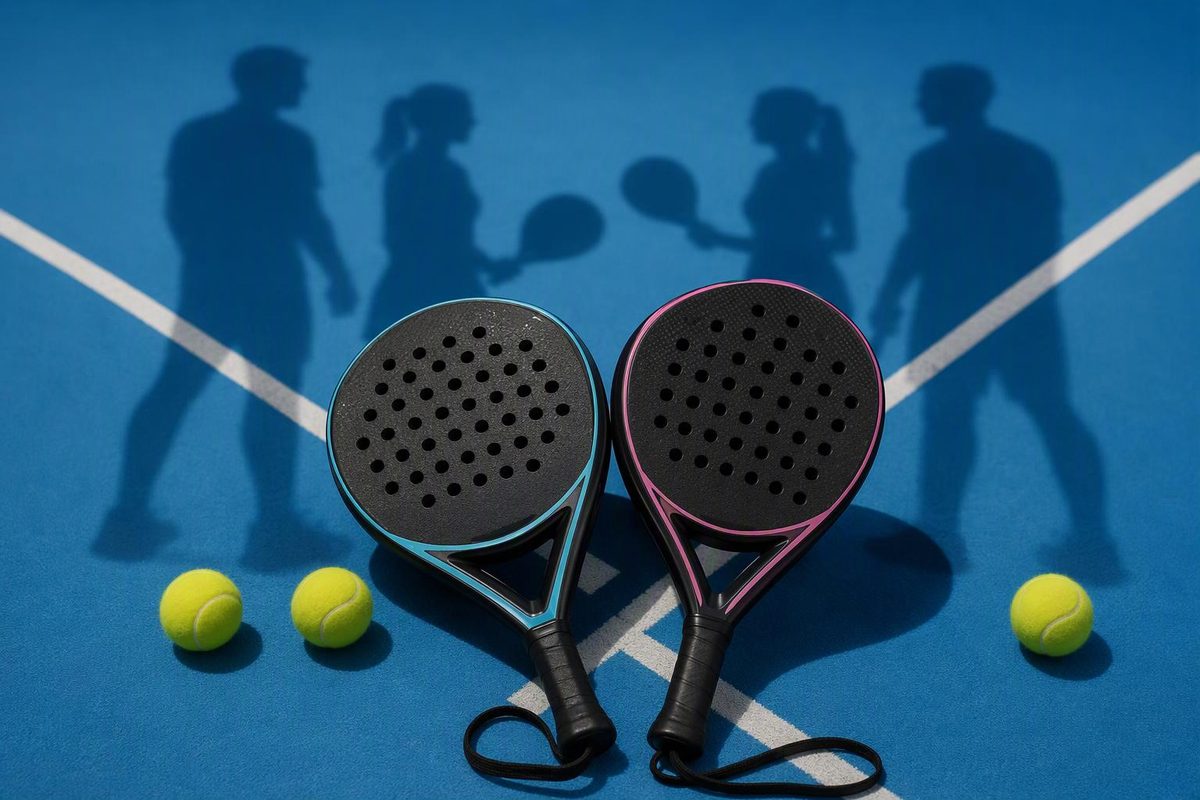
Mixed doubles in padel means two pairs, each made up of one man and one woman, playing against each other. It changes the composition of the teams, not the court or the basic game. The International Padel Federation’s rules, effective from 1 January 2026, explicitly cover mixed matches—including a special receiving rule for deciding points. Source: FIP Rules of Padel.
For a player, the important question is which scoring format the event uses. For someone tracking padel participation, it is whether a published number counts pairs, individual entrants or repeat appearances.
What changes—and what does not
Mixed doubles uses the same 20 × 10-metre court and ordinary serving and rally rules. The server bounces the ball before striking it at or below waist height, serving diagonally into the opposite service box. The receiver must let the serve bounce before returning it.
Each pair establishes its serving and receiving order for the set. Mixed doubles does not require every ordinary serve to go from a man to a man or a woman to a woman. The same-sex requirement applies specifically to the deciding points described below. Source: FIP rules, court dimensions and Rules 1, 6 and 8.
The 2026 FIP rulebook recognises three game-scoring options:
| Scoring option | What happens at 40–40? | Mixed-doubles receiving rule |
|---|---|---|
| Advantage | Play continues until one pair wins two consecutive points from deuce. | Ordinary receiving order continues. |
| Golden Point | One deciding point immediately settles the game. | The receiver must be the same sex as the server; receivers cannot swap positions. |
| Star Point | If play returns to deuce after both the first and second advantage, a deciding point is played at the third deuce. | The receiver must be the same sex as the server; receivers cannot swap positions. |
For example, if a woman is serving the Golden Point in a mixed match, the opposing woman receives it from her established receiving side. The pair cannot swap sides to put her in a preferred position.
Before entering, check the event’s scoring option, match length and any replacement for a full third set. For the wider rules, see our padel game and scoring guide.
Is mixed doubles an organised competition format?
Yes—not just an informal club arrangement. At the 2023 European Games in Krakow, FIP reported a mixed-doubles draw of 16 pairs. Its report also identified players competing in both the men’s and mixed events, including Daniel Santigosa and David Gala. Source: FIP, 22 June 2023.
At club level, Padel United Sports Club publishes a mixed-doubles tournament listing asking players to sign up in pairs, with a stated rating range of 2–4. That is a concrete example of a club offering, not evidence that every club runs the format. Confirm current dates and availability directly with the organiser. Source: club booking page.
How to read mixed-doubles participation figures
The Krakow draw illustrates the counting distinction: 16 pairs represent 32 player places in that event, not 32 additional padel players beyond those in the other draws.
When combining men’s, women’s and mixed entries, count each person once if the aim is unique tournament participants. When comparing recurring club sessions, distinguish unique players from attendances: one person playing on four Saturdays creates four appearances, but remains one participant.
A mixed-doubles draw can document the size of a competition. It cannot, by itself, establish how many people regularly play mixed padel or how quickly that population is growing.